Some mysteries arrive with trumpets — a sealed tomb, a gold hoard, a shipwreck full of silver. This one arrived in a ditch in Cambridgeshire, in the form of about eight thousand small bones, and it took a decade to solve. The bones belonged to frogs. Nobody could say how they had all ended up in the same place, in the same ditch, at the same time. Now, at last, somebody can: the frogs were eaten by owls, in a single winter, some seventeen hundred years ago, on the edge of Roman Britain. It is a small story, and a strange one, and it turns out to contain a whole landscape.
The ditch is at Bar Hill, a village between Cambridge and Huntingdon, where archaeologists spent years digging ahead of the A14 highway improvement scheme. Between 2016 and 2022, the excavations along that stretch of road produced more than 280,000 artifacts spanning roughly twelve thousand years — a Roman amulet carved to resemble the Gorgon Medusa, the earliest physical evidence of beer production in Britain, an Iron Age comb crafted from a human skull. The frog bones were found between 2016 and 2018, in a shallow gully about twenty metres long, at the centre of what had been an Iron Age enclosure. The settlement there had begun in the Iron Age and was still inhabited in the Roman period, on the edge of the Fens, the great low marshy plain around the Wash.
At first the archaeologists read the feature as part of the Iron Age settlement — a roundhouse ditch, perhaps, in an enclosure that belonged to the centuries before Rome arrived. Radiocarbon dating, carried out by the University of Vienna, moved the story forward by several hundred years. The bones dated to the Roman period, about 1,700 years ago, in the second or third century CE; the three radiocarbon results overlap in the third century. Whatever happened in that ditch, it happened long after the Iron Age roundhouse had gone quiet.
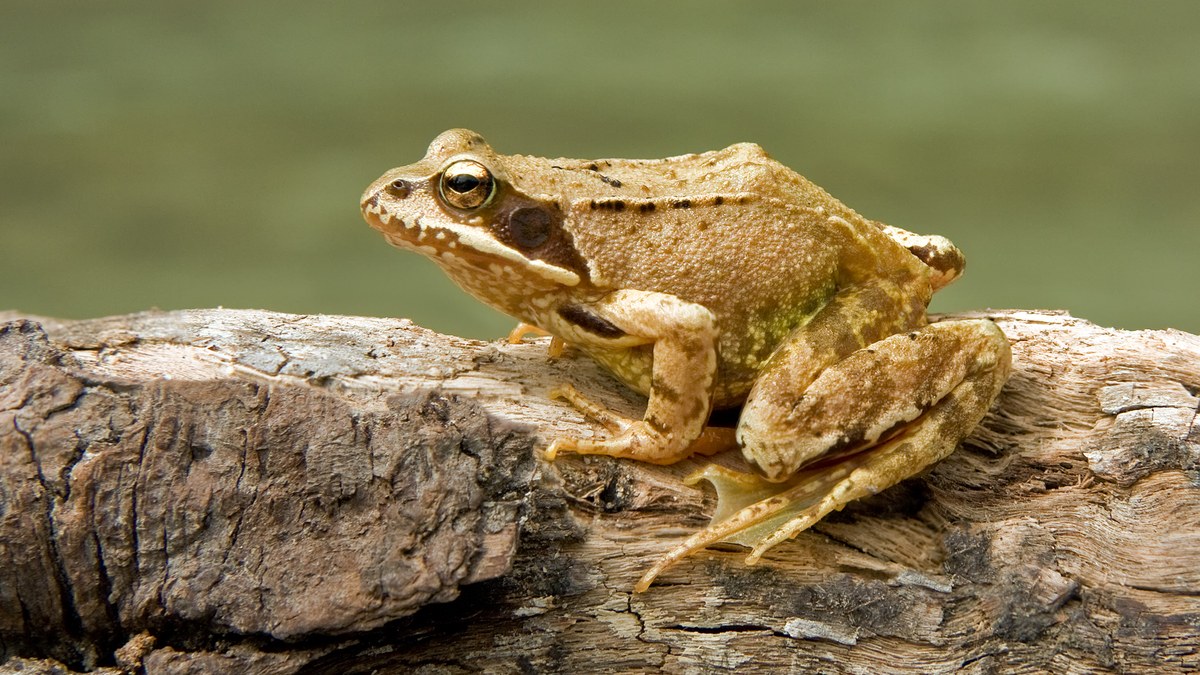
And what happened was, on the face of it, absurd. The bones numbered some eight thousand, and they represented no fewer than 469 individual animals. The great majority were frogs and toads — common frogs, *Rana temporaria*, above all — with shrews, voles, and mice mixed in. One ditch. Hundreds of small animals. No obvious reason for any of them to be there.
Four theories, none of them right
The Museum of London Archaeology, which led the excavation with Headland Archaeology, announced the find in 2022, and the puzzle was plain enough to make the newspapers. Vicki Ewens, a senior zooarchaeologist at MOLA, told the *Observer*'s Dalya Alberge that year: "In my experience, mainly working on sites from London, we don't get that many frogs. To have so many bones coming from one ditch is extraordinary."
The archaeologists worked through the explanations in turn. Perhaps the frogs had fallen into the ditch and been unable to climb out. Perhaps they had died of cold while hibernating through the winter. Perhaps they had been eaten by the people of the settlement — frogs' legs are, after all, a dish with a long history. But there were no cut marks on the bones, and that made the human-meal theory unlikely. Or perhaps someone had deliberately deposited the bones in the ditch, as some kind of offering or disposal. The only evidence for that was a single Roman-era brooch found among the animal remains, and one brooch does not make a ritual.
Four years passed. The bones sat in storage, unexplained, while the A14 scheme moved on and the headlines moved on with it. Then Paul Clarkson, an archaeologist at Bournemouth University, read the news reports of the find and got in touch with Ewens. He had a different idea about how to read the evidence, and he wanted to look at the bones himself.
Reading the bones
What Clarkson brought to the problem was taphonomy: the study of everything that happens to a bone between the animal's death and the archaeologist's trowel. A bone that has passed through a predator's gut does not look like a bone that has simply rotted in the ground. It carries the marks of its journey — breakage patterns, traces of digestion — and different predators leave different signatures.
Clarkson compared the damage on the Bar Hill bones with earlier studies of bones eaten by known predators, and the comparison narrowed the field fast. Otters, grey herons, and grass snakes — all of them keen frog-eaters — were ruled out: the breakage and digestion patterns did not match. What matched was a medium-sized bird of prey. The bones were lightly digested and relatively unbroken, the way bones are when they pass through an owl. Of the amphibian long bones examined, 85.9 per cent showed signs of having passed through an animal's digestive tract. The pattern resembled, closely, the leavings of the short-eared owl, *Asio flammeus* — a hunter of open grassland, which roosts on the ground in groups. The long-eared owl, which also roosts communally, was ruled out on the grounds that it prefers trees or buildings. Hen harriers, which hunt the same open ground, were named as likely companions at the feast.
Then came the question of timing. Clarkson and his co-authors had already published, in 2025, a method for estimating a frog's age at death by measuring its distal humeri — the arm bones. Applied to the Bar Hill assemblage, the measurements showed that most of the frogs had died young, in their first or second year of life, and in the winter of their first year. The paper describes a "short, intensive predation event" spanning the autumn to the following spring, "probably along migration routes to and from hibernation sites." The ditch itself, the on-site evidence showed, had filled within a single year. Hundreds of frogs, eaten in one winter, their bones dropped in one ditch, and the ditch filled in before the next year was out.
"We don't often get an owl's-eye view of what it was like in the past from archaeological sites," Clarkson said. "The mystery of these frogs has been solved — a feast of frogs that were eaten and their bones left behind by a group of owls."
Why that winter, why that ditch
A feast needs a reason, and the paper — "An Owl's Eye View: Human–Animal Entanglement at the Roman Fen Edge," published in the journal *Environmental Archaeology* — offers one, built from several kinds of evidence at once.
First, the water. In the Roman period, the waters of the Fens were retreating in this valley. As ponds dried out, the frogs in them bred faster, and a landscape of shrinking, shallow water produced frogs in abundance. Second, the trees. The valley had been wooded in the Iron Age, but snail, pollen, and charcoal evidence from the site showed that large areas of woodland had been gradually felled over time to make grazing land for livestock. By the Roman period, wide patches of open ground lay where the trees had been. Frogs in the open, with no woodland cover, are easy prey for a bird that hunts over grassland. And short-eared owls hunt over grassland.
It was, in other words, a landscape made by people — drained, cleared, grazed — that created the conditions for a feast the people themselves never attended.
The people who weren't there
That absence is the strangest part of the story, and the paper does not shy away from it. Short-eared owls, the authors note, "only choose quiet roosting sites, so people must have rarely visited this area, particularly with dogs." The owls would not have settled over a ditch that people and their dogs walked past every day. So the settlement that had lived beside this enclosure for centuries was, in that particular autumn and winter, somewhere else — or at least, not here.
Why the locals steered clear of this specific spot in the autumn and winter remains unclear. The scientists' best guess is the most ordinary one: the seasonal movement of livestock. Communities in the area visited on a more seasonal basis, moving their animals to new grazing pastures, and the ditch sat empty while they were gone. The paper allows that avoidance tied to social or ritual reasons is also possible. The single Roman brooch among the bones keeps the question open — the only hint that a human hand may have had anything to do with the deposit, and not enough of a hint to build a theory on.
Ewens, for her part, sounds relieved more than anything. "I had so many theories as to why such [a] large collection of frog bones were recovered from this small feature," she said. "This research shows how even the smallest animal recovered on a site can help us to understand not only past environmental conditions but human activity within a wider landscape."
What a ditch remembers
There is something quietly satisfying about the way this mystery resolves. No treasure, no curse, no lost tribe — just owls, and frogs, and a winter when the water was low and the trees were gone. The bones were not a message. They were leftovers. But leftovers, read carefully, can tell you how wet the valley was, how much woodland had been cut, where the livestock went in winter, and where people did not go. A ditch that nobody visited for a season remembers the season better than any chronicle could, because nobody was there to tidy it up.
The frogs of Bar Hill died in the third century, in a ditch in a landscape their own neighbours had reshaped without meaning to feed an owl. Seventeen hundred years later, the owl's dinner has become one of the clearest pictures we have of that landscape — not from the grand finds, the Medusa amulet or the beer, but from eight thousand small bones that nobody, for a decade, could explain. Sometimes the oddest footnote in the archive is the one that tells the truth.
Sources, in plain text: Smithsonian Magazine, 13 November 2026; Phys.org, 9 November 2026 (Bournemouth University release); Clarkson et al., Environmental Archaeology, DOI 10.1080/14614103.2026.2746302; La Brújula Verde, 10 November 2026. Corrections are welcome. If a source named here has been misread, or if a better source exists, write to the correspondence address on the contact page. A correction that changes the meaning of an entry will be noted in the entry itself. The bone count is given as about 8,000 by most sources; one outlet gives 9,000. Why locals avoided the spot in autumn and winter is not established, and the full paper was not read directly for this entry.