On Monday, in a museum in Belfast, a coroner opened proceedings into a death that happened more than two thousand years ago.
The dead woman has no name. She has no skull. She has no living relatives, no witnesses, and no one left to answer for what was done to her. What she has is a room full of archaeologists, forensic scientists and members of the public, a coroner in a chair, and a set of questions asked in the formal language of a modern inquest: who was she, where and when did she die, and how did she come by her death?
It was, by the museum's own account, the first time anything of the kind had been done — a coroner's investigation into the death of an ancient individual, held inside a museum. And it was also, strictly speaking, not an inquest at all. That contradiction is the heart of the story, and it is worth holding on to, because it tells you something about how the past is handled when it suddenly stops being quiet.
Found by machine workers
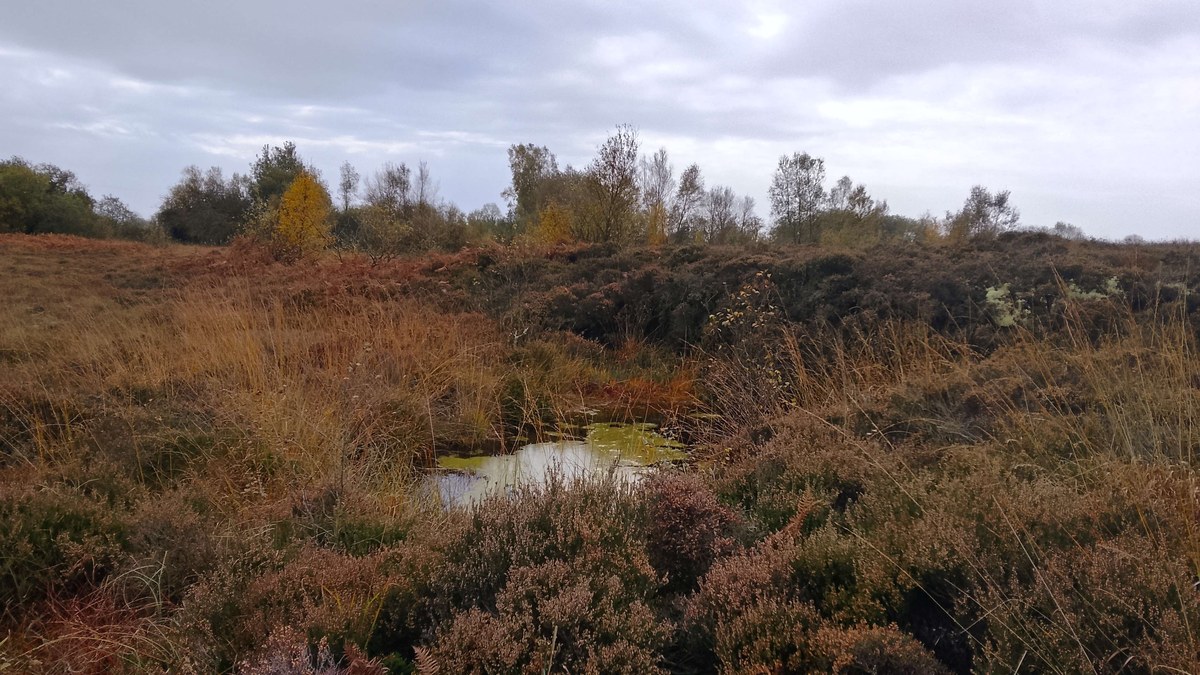
The woman was found in October 2023, in bogland at Ballymacombs More, near the village of Bellaghy in County Londonderry. She was found by machine workers — people cutting peat, doing ordinary work in wet ground — and what they found was reported through the Police Service of Northern Ireland's Archaeological Unit and its Body Recovery Team in January 2024. From there the remains passed to the State Pathology Laboratory, and then to National Museums NI, the body with statutory responsibility for nationally significant archaeological finds in Northern Ireland.
At first, the examiners thought they were looking at a boy. The early assessment put the remains down as a male aged between thirteen and seventeen. That reading did not survive the year-long study that followed. Further research — osteological analysis led by Professor Eileen Murphy of Queen's University Belfast, working with forensic and archaeological partners across Europe — established that the body was female. The evidence presented at this week's hearing put her age at between fifteen and twenty-two. An earlier museum release had given seventeen to twenty-two; the hearing's figure is the wider and more recent one, and it is the one I am using here.
She was about five foot six inches tall. Her body, the museum says, was well preserved. Her skull was absent. It was not recovered, and it has not been found since.
The neck told the story. Cut marks on the neck vertebrae indicate that she was deliberately decapitated — most likely from behind, with a bladed weapon — and that the killing happened in the bog itself. Professor Murphy described it plainly in the museum's own account: the young woman "suffered a highly violent death which involved the flow of blood from her throat followed by decapitation. The head was taken away but the body was left where it fell only to be discovered by machine workers some 2000 years later."
Read that sentence again, slowly. The head was taken away. The body was left where it fell. Whoever killed her did not hide her, or bury her, or carry her home. They left her in the wet ground, and the ground did the rest.
The woven thing below her knees
She was not alone in the bog. Below her knees, the excavators recovered part of a woven item made of plant material — a piece of twined fabric, made by twisting plant fibres together to form a border with a loose, hanging fringe.
It fell to archaeologists at the University of Glasgow to work out what that fragment was. Professor Susanna Harris and PhD researcher Nysa Loudon analysed the fibres and were able to radiocarbon date the twining to between 363 and 160 BC — a range that matches the dating established for the body itself, which National Museums NI places at approximately 343 to 1 BCE. What the thing was, though, they could not say with certainty. It may have formed part of a garment. It may have been a piece of body adornment. It may have been a decorative feature laid on the ground beside her. The honest answer, which the researchers gave, is that it was something made with care, placed with a body, and that its exact purpose is still unknown.
There is a temptation, with a find like this, to fill in the blanks — to decide what the cloth was for, and what the killing meant, and to tell the story as though we knew. The researchers have resisted that temptation, and the draft should too. What we have is a young woman, a blade, a missing head, and a piece of woven plant fibre that someone made by hand more than two thousand years ago. That is already a great deal. It is also, notably, not the whole story.
Why the bog keeps its dead
The reason any of this is knowable at all is the bog. Peat bogs are among the best preservers of the dead in the natural world. The water is cold, acidic and almost entirely without oxygen; the sphagnum moss that forms the peat releases tannins and organic acids that tan skin much as leather is tanned, and suppress the bacteria that would otherwise break a body down. A body laid in a bog does not rot away in the ordinary sense. It darkens, it shrinks, it cures — and it waits.
Europe's bogs have been giving up their dead for a century, and the famous ones have become a kind of grim roll call. The Tollund Man, found by peat cutters in a Danish bog in May 1950, died by hanging between 405 and 380 BCE, and was so well preserved that his finders first took him for a recent murder victim. The Grauballe Man, found in another Danish bog in 1952, died with his throat cut. National Museums NI named Ireland's own comparators at the hearing: Clonycavan Man and Old Croghan Man, two Iron Age bog bodies found in the Irish midlands. The Ballymacombs More Woman joins that company — and she changes it in one important respect. As the museum's own release puts it, the majority of bog-preserved individuals found from this period are male. A young woman, preserved in the same way, killed in the same violent manner, is the exception. Hannah Crowdy, the museum's head of curatorial, told the BBC that she is the first of her kind in Northern Ireland at all.
That is why a museum, a coroner and a dozen universities are involved in a death that happened before the Roman Empire reached Britain. She is not only a body. She is a correction to the record — a reminder that the pattern we thought we knew, of men laid in bogs, was never the whole pattern.
An inquest that is not an inquest
The event at the Ulster Museum on Monday was chaired by Belfast Coroner Joe McCrisken and followed the structure and methodology of a contemporary coroner's investigation. Experts from across Europe gave evidence: National Museums NI and its research partners, including Queen's University Belfast, the National Museum of Ireland, Trinity College Dublin, University College Dublin, the University of Copenhagen, the University of Glasgow, the University of Bradford and the University of Manchester. The Lady Chief Justice, Dame Siobhan Keegan, was consulted, and the event proceeded with her approval as part of the judiciary's outreach programme.
But it was not, in law, an inquest. The museum and the press reports are careful on this point, and the care matters. The hearing was an educational and investigative exercise: a way of putting the available evidence through the framework of a coroner's questions, in public, with experts present, so that the story of a previously unknown young woman could be told properly. Coroner McCrisken said as much in his concluding remarks: the purpose of the exercise, he said, was "not to impose modern legal conclusions upon the distant past, but to provide a framework through which the available evidence could be assessed and the story of a previously unknown young woman could be told."
There is something quietly remarkable in that sentence. A coroner is a person whose ordinary work is to assign cause of death to the recently dead, in cases where the law requires an answer. Here the law requires nothing. Two thousand years have removed every legal consequence. What remains is the human impulse behind the law — the idea that a violent death deserves a formal hearing, a record, and a room full of people willing to listen to the evidence, even when no verdict can follow.
Crowdy told the BBC she believed this was the first time any museum had held a coroner's investigation into the cause of death of an ancient individual. Whether or not that claim survives future checking, the event itself is a first for the Ulster Museum, and the museum clearly intends it as a model: the findings will inform new interpretation in its Early Peoples gallery, and a future exhibition about the discovery is being planned. The remains themselves, the museum has said, will not be on display.
The poet in the room
There is one more thread to this story, and it belongs to a poet. The bogs of Ireland have a literary afterlife as well as an archaeological one, because Seamus Heaney spent a lifetime writing about them. His 1975 collection North drew directly on the bog bodies — the preserved dead as images of history, violence and memory — and his bog poems are now part of how Ireland understands these finds. National Museums NI and Queen's University Belfast marked the fiftieth anniversary of North with a symposium at the Seamus Heaney HomePlace, "Digging into the Bog," bringing experts together to discuss the Ballymacombs More Woman, the significance of bog bodies across Europe, and Heaney's fascination with ancient remains.
I mention Heaney because he understood something the coroner's hearing also understood: that a bog body is not only evidence. It is a person who once lived, and the distance between her world and ours is not as great as two thousand years makes it sound. She was fifteen to twenty-two years old. She was about five foot six. Someone wove something for her, or with her in mind, out of plant fibre. Someone else took a blade to her neck from behind, in a bog, and took her head away. The bog kept the rest. That is the whole of what we know, and it is enough to make the hearing worthwhile.
What we still do not know
The hearing answered the questions a coroner asks — who she was, in the limited sense of age and sex; when and where she died; and how. It did not answer why. The researchers suggest her death may form part of a wider tradition of ritualised killing and sacrifice documented among Iron Age bog bodies across north-western Europe. That is a suggestion, not a finding, and the draft should keep it as one. The precise circumstances of her death remain unknown. There is no evidence in the published reports about who killed her, or what they believed they were doing, or whether the taking of the head was part of the rite or an act that followed it.
Other questions are still open in a more practical sense. The museum's research programme examined her diet, her health and her appearance, using techniques including micro-CT scanning, 3D imaging and digital mapping — but the published reports give no specific findings on those subjects, so this draft claims none. Ancient DNA analysis was described by Professor Murphy as still to come, and its results may change the picture further. And her name, of course, is gone beyond recovery. She is called the Ballymacombs More Woman because that is the convention for such finds: the townland where the remains were found, paired with the sex of the individual. It is a label, not a name. It is the best we can do, and it is not enough, and it is all there is.
She will not be displayed. She will be kept, conserved, studied, and written about. In a gallery not far from where the hearing was held, visitors will one day read her story and look at the woven fragment and the photographs of the ground where she was found. They will not see her. That seems right. A young woman who was killed and left in a bog two thousand years ago has already been looked at enough by strangers. What she is owed now is what the coroner gave her on Monday: a careful hearing, an honest record, and the dignity of being treated as a person who once lived — not a curiosity, not a specimen, and not a mystery to be solved, but a life that ended violently and deserves to be remembered as a life.
The bog kept her body. The museum is keeping her story. The rest — her name, her voice, the reason she died — is still in the ground, and it is staying there.
---
Sources, in plain text: BBC News NI, 17 November 2026; National Museums NI; Press Association, 17 November 2026 (via Farming Life); 4NI, 17 November 2026; University of Glasgow, 17 November 2026; Encyclopaedia Britannica, "9 Noteworthy Bog Bodies". Corrections are welcome. If a source named here has been misread, or if a better source exists, write to the correspondence address on the contact page. A correction that changes the meaning of an entry will be noted in the entry itself. The age given here — fifteen to twenty-two — is the figure presented at the hearing; an earlier museum release gave seventeen to twenty-two. The suggestion that her death was part of a wider tradition of ritualised killing is a suggestion, not a finding; findings on her diet, health and appearance have not been published, and ancient DNA analysis is still to come.