After Rome Banned Them: Cybele, the Nymphs, and Balak Dere
There is a particular kind of stubbornness that archaeology occasionally digs up, and it is not the stubbornness of stone. Stone endures by accident. What was found this October beside the Arda River in southeastern Bulgaria looks more like stubbornness of a human kind: a small temple, in use long after the empire that ruled it had told its people to stop.
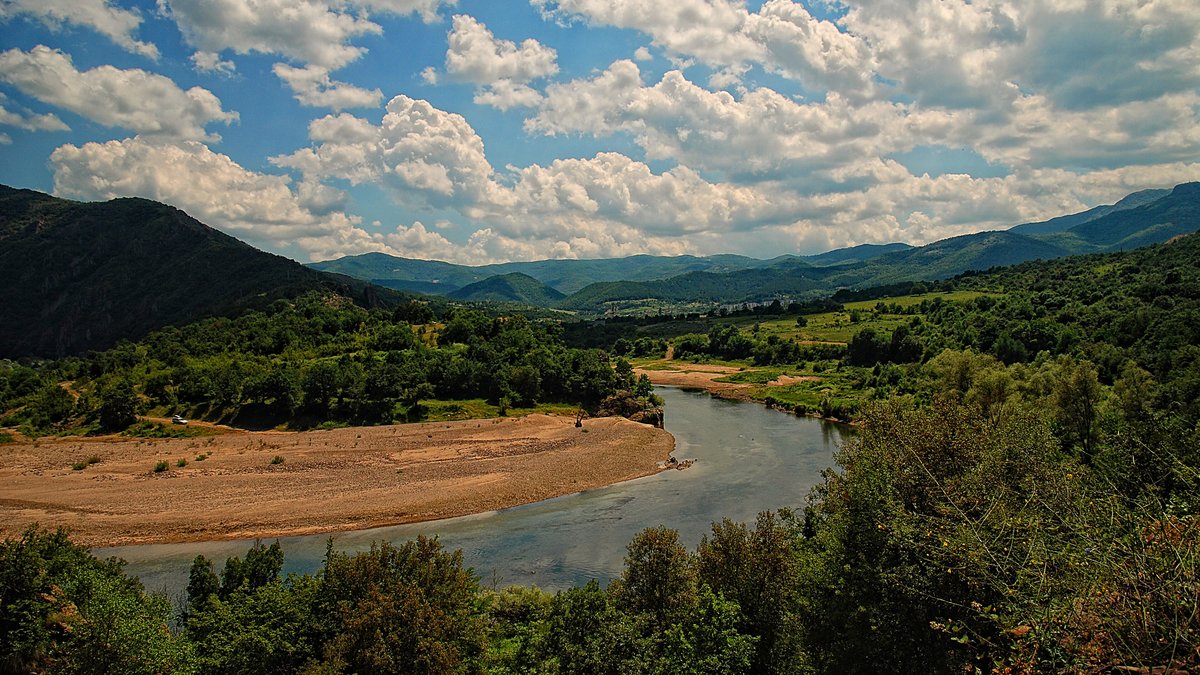
The place is called Balak Dere, near the town of Ivaylovgrad, in the Eastern Rhodope Mountains, in the historic region of Western Thrace. Archaeologists from Bulgaria's National Museum of History have just finished their 2026 excavation season there, led by the museum's chief curator, Ivaylo Kanev, with funding from the Ministry of Culture and support from the Ivaylovgrad municipality. The season's headline find is a marble relief. It shows the mother goddess Cybele together with three nymphs, and the team reports that it knows of no other scene that places the nymphs and Cybele together in a single composition.
That last detail matters more than it might first appear. Ancient art is full of repeated pairings. Gods acquire standard companions, standard poses, standard attributes, the way a familiar song acquires a familiar chorus. When a combination turns up that nobody can match elsewhere, it suggests something local: a cult shaped by the people who actually gathered in that building, beside that river, rather than copied from a pattern book in Rome.
A small building, read room by room
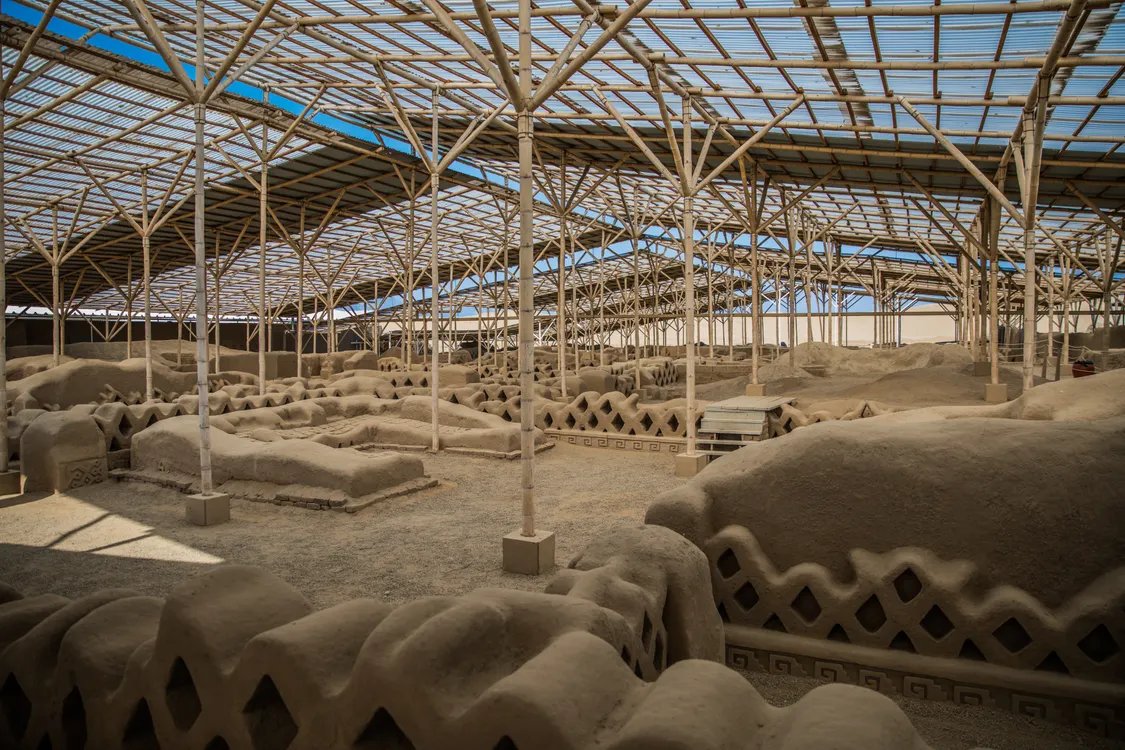
The temple itself is modest, and its modesty is part of the story. It measures about 15 metres — roughly 49 feet — in length, laid out on a trapezoid plan with its long axis running from southeast to northwest. Inside, three rooms stand in a line, connected by doorways. The largest room held an altar. The middle room is thought to have been used for sacrifices. The third room may have served as storage for the offerings worshippers brought.
It is worth pausing on the careful verbs there: thought to have been used, may have served. Archaeology at its best is honest about the distance between a room and a rite. A hearth or an altar tells you where fire burned; it does not hand you the words that were spoken over it. What the three-room arrangement does give researchers is something rarer than a single spectacular object. According to the excavation team, no earlier dig has recorded all the main parts of a pagan temple arranged together in this way, in a city setting, from the Roman period up to the fifth century. The building can therefore be read as a whole — entrance, sacrifice, offering, altar — rather than reconstructed from a single surviving wall.
And then there is the water. A channel runs around the entire building, and the Arda River flows close by. Put that together with a relief of water spirits, and the team has proposed a working hypothesis: that the site was a nymphaeum, a shrine to the nymphs.
Nymphs, in the Greek and Roman imagination, were the female spirits of particular places — of springs, streams, rivers, and lakes — guardians of the water that made a settlement possible. A shrine to them beside a river, with water channelled around its walls, is not decoration. It is the building participating in its own theology: the water it honoured was made to run around it. That is a hypothesis, and the researchers present it as one, to be tested against further study of the relief and the channel. But it is a hypothesis with a pleasing logic to it. If you wanted to honour the spirits of the water, where else would you build but where the water already was?
The mother goddess and her unexpected company
Cybele needs a brief introduction, because she is less familiar to most readers than the Olympian gods, and her strangeness is the point. She was honoured as a mother goddess, a figure of nature and fertility whose worship came to the Greek and Roman world from Anatolia and was absorbed, adapted, and argued over for centuries. She is a goddess of wild places and of the earth itself, not of a single city or a single trade.
To find her carved beside three nymphs is therefore doubly suggestive. It joins a great, wandering mother goddess to the small, local spirits of one river valley. It is the kind of pairing a community invents for itself: the grand figure of the wider world, kept company by the spirits of home. Whether the relief was commissioned for this temple, or arrived there by some route the evidence no longer preserves, the reports do not say — and this draft will not invent an answer. What can be said is that the carving survived, in marble, in a building whose other contents were organised around water, altar, and offering, and that the team considers the combination unmatched.
Worship after the ban
The most startling claim about Balak Dere is not the relief but the dates. The temple likely began operating in the third century AD. Then, in 392, the Roman emperor Theodosius I made Christianity the empire's only official religion and banned pagan rites. The excavators say that worship at Balak Dere appears to have continued anyway, into the middle of the fifth century — decades after the ban.
That is a long time to keep a forbidden fire lit. It is also, crucially, a claim about persistence rather than defiance in the heroic, cinematic sense. We do not know the names of the people who came to this temple in those later decades, how many of them there were, or what they risked by coming. The evidence is architectural and stratigraphic: a building that kept being used, a burned layer at the end, and a sequence that does not stop neatly at 392. To say that "pagan worship continued" is to describe what the layers suggest. It is not to give us a congregation, a priest, or a martyr. The odd footnote of history is often exactly this: not a rebellion with a name attached, but a room that stayed warm longer than the law allowed.
How it ended is told in fire. Around the middle of the fifth century, the whole complex was destroyed by burning. The researchers interpret that fire as an attempt to wipe out the memory of the great Thracian gods, after officials discovered that rites were continuing in spite of the ban. That interpretation should be carried with care. A burned layer proves a fire; it does not, by itself, prove who lit it or what they intended. The reports present the deliberate-erasure reading as the team's interpretation of the evidence, and this article follows them in that, rather than upgrading it to certainty. What is not in doubt is the sequence: a temple built in the third century, used into the fifth, and ending in fire at a moment when the old gods were no longer supposed to have a home anywhere in the empire.
Why a small temple counts as a last
The excavators suggest that Balak Dere could hold one of the last pagan temples of the Thracians in Western Thrace. "Last" is a word that should always make a historian nervous — lasts are declared in hindsight, and another dig can always unseat one — but the claim here is specific rather than grand. It rests on the building's design, its dating, the relief, and the link to water, taken together. A temple whose full plan survives, whose gods can be named from its own carving, and whose use runs past an imperial ban is, at the very least, a late witness. It shows old cult practices surviving through years of repression, not as a rumour in a chronicle but as rooms, an altar, a channel, and a piece of marble.
There is a quieter lesson in Balak Dere, too, about how history usually ends. Empires change religion by edict, in a single year — 392, in this case — and the edict is what survives in the textbooks. But religion, for most people, was not an edict. It was a walk to a familiar building, an offering left in a familiar room, water running around familiar walls. The ban could close a temple on paper long before it closed it in practice. Balak Dere suggests that, beside one river in Thrace, practice outlasted paper by decades, until fire did what law had not.
That is why the relief matters, and why the river matters, and why a 15-metre building with three rooms counts as news. It is not a wonder of the world. It is a footnote that refused, for a while, to be footnoted — a small shrine where a mother goddess and three water spirits kept company, in a valley where the water still runs, long after the empire that banned them had itself become history.
Sources, in plain text: Archaeology Magazine, 26 October 2026; Archaeology News Online Magazine, 26 October 2026; HeritageDaily, October 2026. Corrections are welcome. If a source named here has been misread, or if a better source exists, write to the correspondence address on the contact page. A correction that changes the meaning of an entry will be noted in the entry itself. The nymphaeum identification, the functions of the middle and third rooms, and the deliberate-erasure reading of the final fire are the excavators' interpretations as reported, not independently established facts.